.png)
Everything You Need to Know About Partition Walls in Singapore
- Sep 25, 2025
- 3 min read

Partition walls are increasingly popular in Singapore homes and commercial spaces. Whether you want to divide an open-plan HDB flat, create a private work-from-home nook, or separate living and dining for better layout flow, partition walls offer flexibility without the permanence of structural walls. This guide covers what partition walls are, types, costs, regulations, and tips to choose the right partition wall contractor in Singapore.
What Is a Partition Wall?
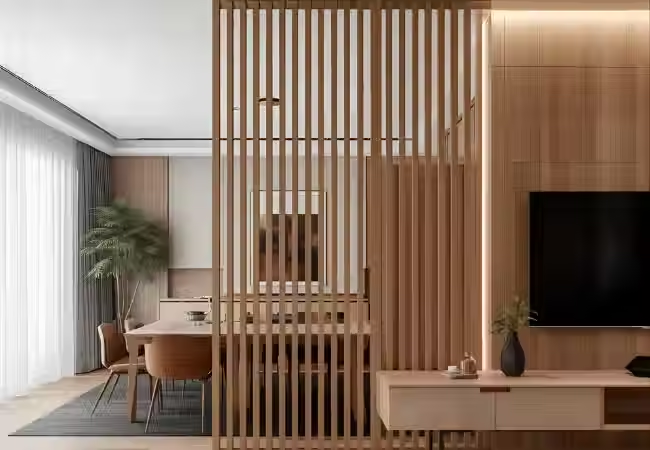
A partition wall is a non-load-bearing wall used to subdivide interior spaces. Unlike structural or load-bearing walls, it does not carry any of the building’s weight. Instead, it provides visual separation, privacy, sound insulation, or design accents. Common materials include drywall/gypsum board, glass, wood/timber, aluminum or metal frames, and modular panels.
Popular Types of Partition Walls in Singapore
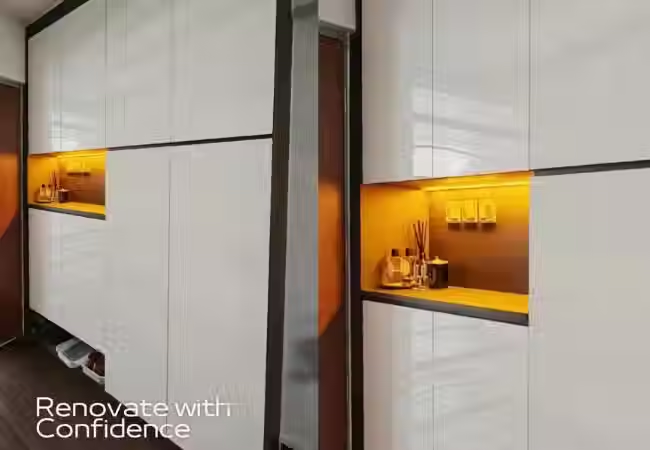
Drywall / Gypsum Board Partitions
· Pros: Cost-effective, easy to install, easy to paint/finish; good for general separation and non-urgent use.
· Considerations: Moderate soundproofing, some moisture sensitivity, joints and seams need good finishing.
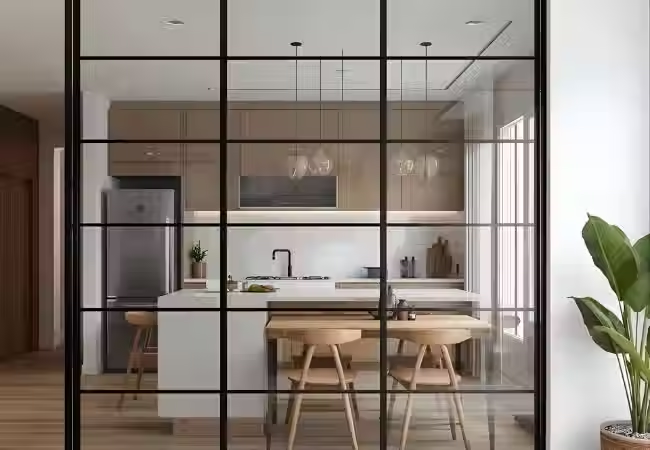
Glass Partitions (clear, frosted, tempered)
· Pros: Creates a bright, airy feel; allows light to pass, looks modern. Great in offices and some homes.
· Considerations: More expensive, needs stronger framing. Privacy issues unless frosted or treated; cleaning required.
Wood / Timber / MDF Partitions
· Pros: Adds warmth, can be custom-designed. Good for decorative or partial dividers.
· Considerations: Susceptible to insects or warping if moisture is present. Fire rating may be lower unless treated; cost can vary.
Modular / Metal Frame Partitions
· Pros: Flexible; good for changes, sometimes easier to dismantle or adjust. It can incorporate different panels or glass.
· Considerations: Can look industrial, finishing matters. Labor cost depends on complexity.
Regulations & Approval Considerations
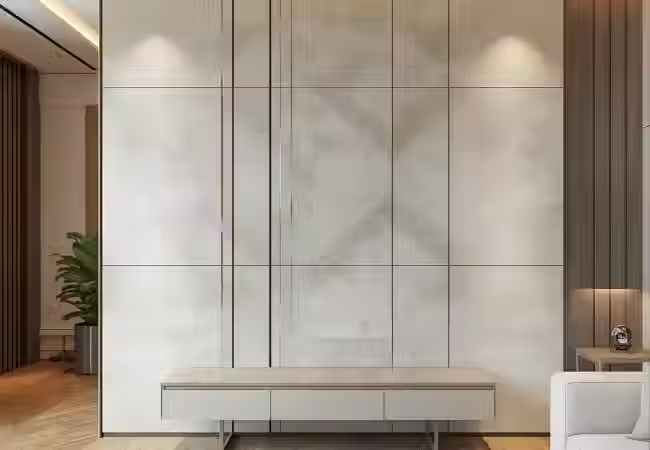
For HDB flats, certain rules apply: permit requirements, noise control, and restoration obligations. Some partition work could need HDB approval, especially if altering walls near structural or neighbor boundaries.
Fire-safety and building code compliance are important. If you’re installing glass partitions, especially in commercial or public areas, check that fire rating and safety glass requirements are met.
Also, consider the Building and Construction Authority (BCA) and any relevant guidelines for interior renovations. Ensure your contractor is familiar with local requirements.
Why Use Partition Walls?

· Create privacy in open-plan layouts without permanent structural changes. Especially useful in modern HDB and condo designs where open living, dining, and kitchen spaces dominate.
· Flexibility, you can change or remove partition walls more easily than load-bearing walls.
· Design enhancement, partitions can also be aesthetic elements.
· Cost saving compared with building permanent walls; it is also faster to install and less disruptive.
Tips for Choosing a Partition Wall Contractor in Singapore
1. Check past work & portfolio – look for examples of partition walls similar to what you want.
2. Get multiple quotes – compare materials, labor, finish, and warranties.
3. Ask about materials and fire/sound rating – especially for glass or wood partitions
4. Ensure compliance & permits – contractor should handle or advise on any required approvals (HDB, BCA).
5. Finish quality – seams, joints, paint, edge treatment matter for durability and aesthetics.
Conclusion
Partition walls are a versatile, cost-efficient way to redefine your interior space in Singapore. Whether for privacy, zoning, or aesthetic effect, choosing the right type, materials, contractor, and ensuring compliance will make all the difference.
Thinking of installing a partition wall? Contact Chop Heng Long today at 9632 3845 for a FREE consultation and quotation.


Comments